
This election will decide in what shape and form the Akali Dal will survive.
In the policy banks, the government can have 100 per cent stake, McKinsey said.
RBI has already come out with a discussion paper on banking sector in India, on which the regulator has invited comments from stakeholders.

FMC has been asked to go ahead with the appointment of 20 experts, which the commission had sought earlier.

The Budget has unveiled measures that should now pave the way for India to progress from Make in India to 'Innovate in India'.

India suffers from peak power deficit of three per cent.

Of the seven surveys presented under Modi govt, predictions of three were quite close to the actual GDP growth rate, one saw the base year change in between, but the last three were way off the mark.

The career bureaucrat-turned-central banker walked into the 19th floor corner room of the Reserve Bank on December 12, 2018. Since February 2019, the Das-led RBI has cut the repo rate by a whopping 135 basis points to support the sagging growth, including an unprecedented 35 bps reduction in August. As he completes one year at the helm, woes in the NBFC sector, overall health of the banking sector and steeply falling economic growth are among the major challenges that needs to be tackled sooner than later.

Watal panel had suggested an independent payments regulator be set up.
The Reserve Bank of India on Wednesday retained the economic growth projection for the current financial year at 10.5 per cent, while cautioning that the recent surge in COVID-19 infections has created uncertainty over the economic growth recovery. In its last policy review, the RBI had projected a GDP growth rate of 10.5 pc for FY'22. Taking various factors into consideration, it said, "the projection of real GDP growth for 2021-22 is retained at 10.5 per cent consisting of 26.2 per cent in Q1, 8.3 per cent in Q2, 5.4 per cent in Q3 and 6.2 per cent in Q4."

The speed at which he led the central bank in different areas -- ranging from internal reorganisation to inflation fighting, stabilising the currency, taking on rogue corporations, cleaning up bank balance sheets, and opening the sector -- makes one believe that Rajan knew he had only three years to do his job. A fascinating excerpt from Tamal Bandyopadhyay's MUST-READ Roller Coaster: An Affair with Banking.

'We have set out a timetable to reduce income tax rates for all incomes below Rs 50 lakh, and to progressively eliminate the surcharges on income above Rs 50 lakh, by 2024.' The Budget speech past CII president Naushad Forbes wants to hear.

After Raghuram Rajan leaves, the world for the succeeding RBI governors will be distinctly different.

Here's the full text of address to the nation by President Droupadi Murmu on the eve of the Republic Day 2023.

'Modi had not discussed demonetization with me prior to his announcement on 8 November 2016. 'I learnt of it along with the rest of the country. 'I was not surprised when he did not discuss the issue with me prior to making the public announcement. 'It fitted in with his style of making dramatic announcements.' A fascinating excerpt from Pranab Mukherjee's The Presidential Years: 2012-2017.

GST stabilisation, DTC implementation and banking reforms are crucial for sustaining high growth for a long period, says Rashesh Shah.

Finding itself trapped in a cul de sac, all things considered, a negotiated climbdown at this juncture seems the only sensible course available for the Centre, suggests Virendra Kapoor.

'We can't have the best of both worlds -- large, efficient, world class government-owned banks, doing social banking and making profits. 'Why not set them free from the shackles of such obligations and run them as business units?' says Tamal Bandyopadhyay.
Chetan Ghate, Pami Dua and Ravindra Dholakia have been appointed for 4 years

He said the short term macroeconomic priorities of the RBI continue to focus on bringing down inflation towards the government-set target of 4 per cent

The main issues confronting CFOs currently, according to Deloitte, are the current economic slowdown, a depreciating rupee and inflation.

13 eminent economists, including former RBI governor Raghuram Rajan and current International Monetary Fund Chief Economist Gita Gopinath, in a report have asked the political establishment not to resort to populist tricks.

'The hour is very late, and the choice between triumph and tragedy knocks at our door,' says Ajay Shah.

The landmark bill to liberalise the insurance industry, which marks Prime Minister Narendra Modi's first stab at legislative reforms, will now go to a parliamentary committee, which will submit a report later this year.

'The Reserve Bank's independence has remained a work in progress, an enduring challenge that the nation has been grappling with on an ongoing basis,' says RBI Deputy Governor Dr Viral Acharya.

India is among 75 countries with which Switzerland's Federal Tax Administration has exchanged information on financial accounts within the framework of global standards on Automatic Exchange of Information.

'Clearly, the depositors of cooperative banks need the maximum protection.'
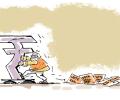
'We have promised to ensure reduced tax rates.'

Advice to the new finance minister from former RBI governor Raghuram Rajan: 1. Clean up banks by reviving projects that can be revived after restructuring debt. 2. Improve governance and management at public sector banks. 3. De-risk banking by encouraging risk transfers to non-banks and the market. 4. Reduce the number and weight of government mandates for public sector banks, and for banks more generally.

The Finance Ministry is considering a proposal to rope in professionals from the private sector for appointment of chairman and CEO-cum-managing director in state-owned financial institutions as it looks for talent from a wider pool of applicants.

The government has also allowed individuals from the private sector to apply for the post

NITI Aayog vice chairperson Rajiv Kumar tells Indivjal Dhasmana that additional funds could be generated through divestment, and that the fiscal deficit should be widened while focusing on the revenue deficit.
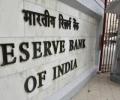
The idea is to boost household savings and turn more of them into growth capital. If the plan succeeds, sustained eight per cent-plus rates of gross domestic product growth should be within reach in a few years.
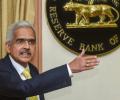
'His (Das) approach to work seems that of working as a team with ease in communication.'

'We all wanted a strong Centre with a decisive mandate from the people, to allow them to take bold decisions.'

Experts have started giving comments on provisions that the govt must make in Budget 2016-17.

India will need an annual investment of Rs 15 trillion in infrastructure over the next five years, says Chandrajit Banerjee, DG, CII.

The SJB has begun to collect signatures from MPs for the no-confidence motion, according to media reports.

The size of the hole in today's banking crisis appears to be roughly 10 per cent of GDP.

His finest years came when he served as deputy governor under C Rangarajan.
 © 2026 Rediff.com - Advertise with us - Disclaimer - Privacy Policy - Sitemap - Feedback - About us - Terms of use - Grievances